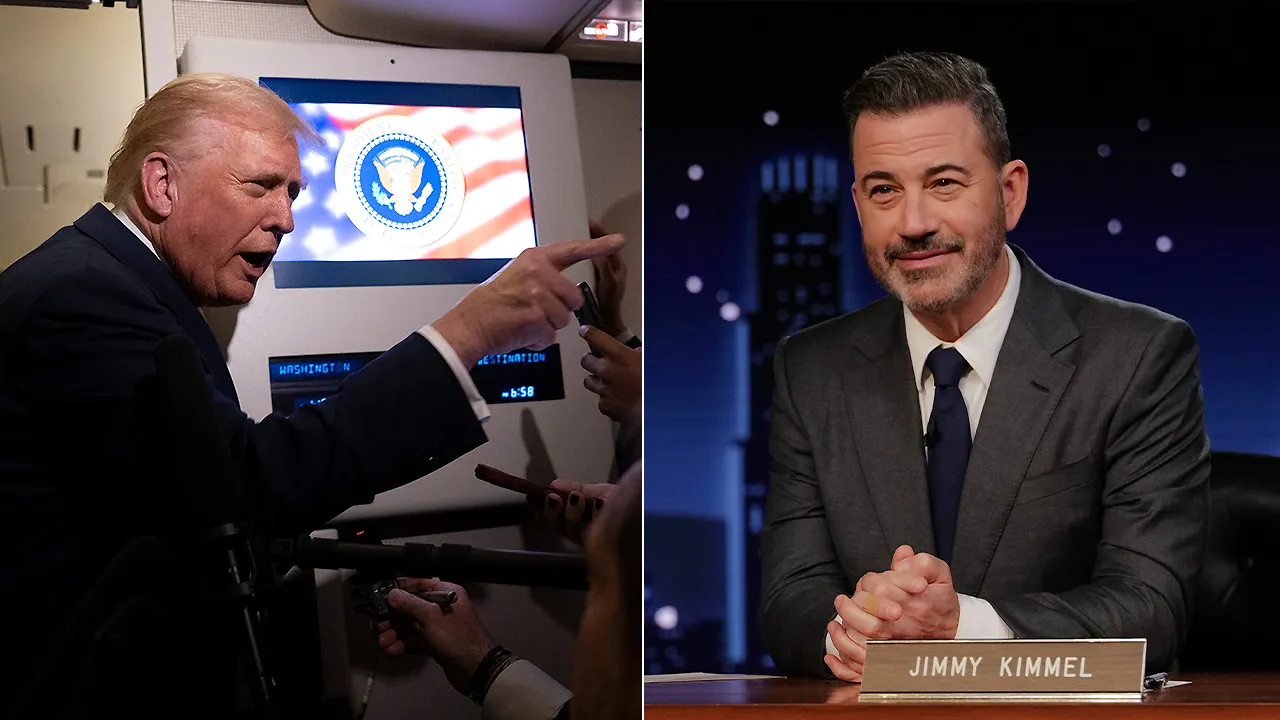
The White House has reportedly escalated efforts to compel ABC to terminate Jimmy Kimmel in response to a recent on-air remark about the First Lady. What began as a sharp comedic jab has spiraled into a high-stakes political and media standoff, raising urgent questions about the boundaries of satire, the role of political pressure in media decisions, and the precedent such actions could set.
This isn’t the first time Kimmel has courted controversy. But this instance crosses a threshold—both in tone and in consequence—marking a shift from routine partisan jabs to something more personal. The administration’s aggressive stance signals a broader discomfort with late-night comedy’s influence, especially when it targets figures traditionally afforded public deference.
The Comment That Sparked the Backlash
During a monologue on Jimmy Kimmel Live!, the host referenced the First Lady in a segment criticizing political optics. Without naming her directly, Kimmel mocked a recent public appearance, quipping, “She looked like she’d rather be anywhere else—probably because she married the job, not the man.” The audience laughed. The clip, however, spread rapidly online, with conservative media amplifying it out of context.
Within hours, the White House issued an uncharacteristically pointed statement: “The President believes such personal attacks on the First Lady are inappropriate, disrespectful, and reflect poorly on the network that airs them.” While not explicitly calling for Kimmel’s firing, the message was clear: ABC should consider distancing itself from the host.
Insiders say pressure intensified behind closed doors. Senior administration officials contacted ABC executives through intermediaries, urging “swift action” and warning of potential consequences for the network’s access to future White House events and interviews.
How Political Pressure Shapes Media Decisions
Networks like ABC walk a tightrope between editorial independence and political pragmatism. While they’re not government entities, their operations rely on regulatory cooperation, access to public figures, and public goodwill—all of which can be influenced by political actors.
Historically, administrations have used subtle leverage over broadcasters. The Reagan White House monitored Saturday Night Live skits. The Obama team privately expressed concern over Jon Stewart’s tone. But direct pressure to fire a talent is rare—and dangerous.
ABC faces a dilemma: - Censorship concerns: Firing Kimmel would set a precedent that political disapproval can cost jobs. - Public perception: Ignoring the backlash could alienate a segment of viewers who see the comment as crossing a line. - Corporate interest: ABC is owned by Disney, a company with significant government-facing ventures (e.g., theme parks, regulatory approvals).
What’s at stake isn’t just one host’s career—it’s the autonomy of entertainment media in the face of political overreach.
The Line Between Satire and Disrespect
Satire has long been a check on power. From Mark Twain to Lenny Bruce, comedians have used exaggeration and provocation to hold leaders accountable. Jimmy Kimmel operates in that tradition.
But the nature of attacks on political spouses is more contested. Unlike elected officials, First Ladies are not public servants by mandate. They’re often thrust into the spotlight by marriage, not ambition. Critics argue they deserve a buffer from personal ridicule.
Kimmel’s comment wasn’t overtly malicious, but it played into a broader pattern: treating spouses as extensions of political brands. When comedians mock a First Lady’s expression, wardrobe, or demeanor, they’re rarely critiquing policy—they’re targeting femininity, visibility, and emotional labor.
That nuance is lost in viral clips. What may be intended as commentary on political performance becomes, in the digital echo chamber, a personal affront.
ABC’s Possible Responses—and Their Risks
ABC has several options—each with trade-offs.
- No Action
- Let the comment stand as protected speech. Reaffirm Kimmel’s creative freedom. Pros: Defends editorial independence. Cons: Risks ongoing political friction and viewer backlash.
- Public Reprimand
- Issue a statement distancing the network from the remark. Pros: Shows responsiveness without capitulation. Cons: May appear performative. Could signal future vulnerability to pressure.
- Internal Warning
- Privately caution Kimmel to avoid similar topics. Pros: Maintains surface peace. Cons: Chills creative expression. Sets a precedent for self-censorship.
- Suspension or Reduced Airtime
- Temporarily pull Kimmel or shorten his contract. Pros: Satisfies political critics. Cons: Opens ABC to First Amendment backlash. May alienate core audience.
- Termination
- Fire Kimmel outright. Pros: Sends strongest signal of compliance. Cons: Guarantees massive public and media backlash. Could trigger talent exodus.
Any move toward punishment—especially termination—would mark a turning point in the relationship between political power and entertainment media.
The Broader Cultural Shift
Kimmel’s situation reflects deeper cultural tensions. Audiences are increasingly polarized in what they find acceptable. A joke that one group sees as harmless humor, another views as degradation.
Late-night comedy, once a shared cultural ritual, now often preaches to the choir. Kimmel, while less overtly political than Colbert or Meyers, still draws criticism from the right for perceived bias.
At the same time, the weaponization of outrage—by both sides—has eroded the space for nuance. A single line, stripped of context, can trigger national firestorms.
The White House’s involvement suggests a strategy: not just to punish a comedian, but to signal that certain topics are off-limits. That’s a dangerous game. When power dictates the boundaries of humor, democracy loses one of its safety valves.
What This Means for Other Comedians
Kimmel isn’t alone. If ABC caves, others will feel the chill.
Late-night hosts rely on network support. But they also depend on the perception of independence. If audiences believe shows are sanitized to avoid political fallout, viewership erodes.
Comedians may begin policing themselves: - Avoiding jokes about political families. - Steering clear of personal traits (appearance, demeanor, relationships). - Defaulting to safer, less impactful material.
That doesn’t just dull comedy—it weakens public discourse. Humor disarms. It exposes hypocrisy. It humanizes power. When that tool is muted, leaders operate with fewer checks.
Several comedians have already voiced concern. Sarah Silverman called the pressure campaign “a soft coup against free speech.” John Mulaney warned, “Once they come for Kimmel, they’ll come for all of us.”
Historical Precedents—and Warnings

This isn’t unprecedented. In 1977, NBC briefly canceled Saturday Night Live after a sketch mocked then-First Lady Betty Ford’s breast cancer surgery. Public outcry forced a reversal.
In 2003, CBS fired Dan Rather from the Evening News after controversy over a disputed report on George W. Bush’s military service. While not a comedy case, it showed how political pressure can influence personnel decisions under the guise of editorial standards.
More recently, Fox News dropped Tucker Carlson—not due to external pressure, but internal disagreements. Still, it highlighted how quickly media figures can fall when their content becomes politically inconvenient.
Each case shares a warning: when networks yield to political demands, they risk becoming tools of power rather than watchdogs.
What ABC Should Do—And Why It Matters
ABC must resist the pressure. Firing Jimmy Kimmel over a single satirical comment, however ill-advised, would normalize political censorship in entertainment.
Instead, the network should: - Affirm Kimmel’s right to express opinions, even unpopular ones. - Clarify its commitment to editorial independence. - Consider adding context in future broadcasts—perhaps a brief disclaimer on the role of satire. - Engage in public dialogue about the evolving norms of comedy and respect.
The stakes transcend ratings or revenue. This is about whether American media will remain a space for challenge, critique, and laughter—or become an extension of political control.
Closing: Protect the Punchline
The White House’s campaign against Jimmy Kimmel isn’t really about one joke. It’s about control. About who gets to define what’s acceptable in public conversation.
Comedy has always pushed boundaries. Sometimes it stumbles. But when power retaliates by demanding jobs, it doesn’t defend dignity—it undermines democracy.
ABC has a choice: stand with its talent and the principle of free expression, or yield to pressure and set a precedent that could silence voices far beyond late-night TV.
The punchline shouldn’t cost a career. The real danger isn’t a bad joke—it’s a silent room.
FAQ
Did Jimmy Kimmel directly name the First Lady in his remark? No, Kimmel did not name her. The comment was veiled but widely interpreted as referencing her.
Has the White House officially demanded Kimmel be fired? Not publicly. But officials have applied indirect pressure on ABC executives through private channels.
Can the government legally force ABC to fire someone? No. The government can’t directly compel a private network to terminate an employee. But it can use influence, access, and regulatory leverage.
Is this the first time a late-night host faced political pressure? No. Hosts like Leno, Stewart, and Colbert have faced backlash, but direct career threats are rare.
Could Kimmel’s comment be considered harassment? Legally, no. It doesn’t meet the threshold for harassment, which requires targeted, severe, and pervasive conduct.
What has ABC said publicly about the situation? ABC has released a brief statement affirming Kimmel’s role on the network but acknowledging “differences of opinion” about the content.
How are viewers reacting? Reactions are split. Some defend free speech; others believe the remark was disrespectful and warranted consequences.
FAQ
What should you look for in White House Pressures ABC to Fire Jimmy Kimmel Over First Lady Remark? Focus on relevance, practical value, and how well the solution matches real user intent.
Is White House Pressures ABC to Fire Jimmy Kimmel Over First Lady Remark suitable for beginners? That depends on the workflow, but a clear step-by-step approach usually makes it easier to start.
How do you compare options around White House Pressures ABC to Fire Jimmy Kimmel Over First Lady Remark? Compare features, trust signals, limitations, pricing, and ease of implementation.
What mistakes should you avoid? Avoid generic choices, weak validation, and decisions based only on marketing claims.
What is the next best step? Shortlist the most relevant options, validate them quickly, and refine from real-world results.

:max_bytes(150000):strip_icc()/GettyImages-21696356521-4fbe8ad077b44dd89725c2f789cb6716.jpg)